The Importance of Balcony Waterproofing to Prevent Leakage
A balcony is often seen as a bonus space in a home. It might be where you dry laundry, keep a few plants, or simply step outside for fresh air. Because it sits outdoors and is exposed to the elements every day, it naturally experiences more wear and tear than other parts of the house.
One of the most common problems that develops over time is water seepage. This is why balcony waterproofing matters more than many homeowners realise. Proper waterproofing protects the structure beneath the surface and helps prevent repairs that can quickly become expensive and disruptive.
Key Takeaways
Balcony leaks are common in Malaysia due to frequent rain, high humidity, and daily temperature changes.
Small cracks or drainage issues can allow water to seep beneath the surface and weaken the structure over time.
Ignoring early signs of leakage can lead to mould growth, structural damage, and costly renovations.
Regular inspections and basic maintenance can significantly extend the lifespan of balcony waterproofing.
Preventive care is more cost-effective than repairing major water damage later.
Why Balcony Leaks Happen More Often Than You Think
Balconies are constantly exposed to rain, sunlight, and temperature fluctuations. These environmental conditions cause building materials to expand and contract repeatedly, gradually weakening the surface. Over time, even small openings can allow water to enter and accumulate beneath tiles or within concrete.
In many cases, leaks do not appear suddenly. They develop slowly as moisture finds its way into tiny gaps and spreads underneath the surface. By the time visible signs become noticeable, the damage may already be more advanced than expected.
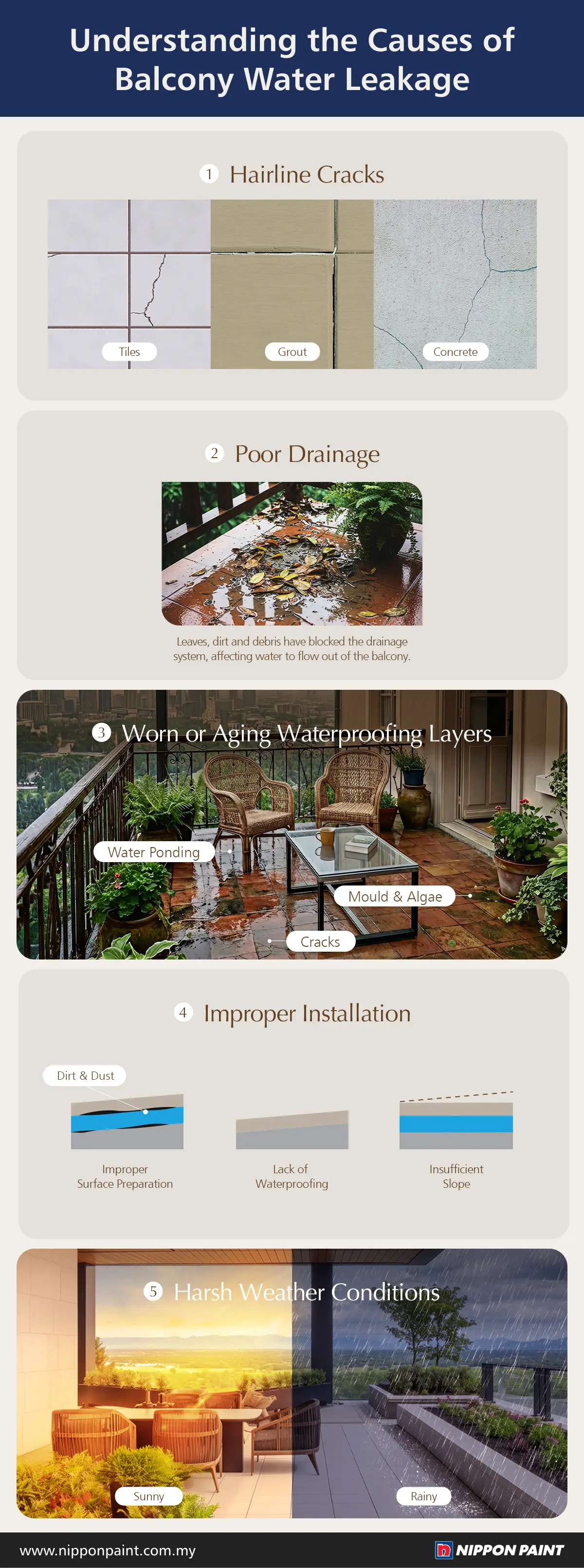
Some of the most common causes of balcony leakage include:
Hairline cracks in tiles, grout, or concrete that allow water to seep through
Poor drainage that causes water to pool on the balcony surface
Worn or aging waterproofing layers that have lost their effectiveness
Improper installation during construction or renovation
Long-term exposure to harsh weather conditions that weaken materials
Understanding these causes helps homeowners recognise risks early and take action before minor issues escalate into major repairs.
The Hidden Risks of Ignoring Waterproofing
A leaking balcony might seem like a minor inconvenience at first, but the effects rarely stay confined to the outdoor space. Water naturally travels along surfaces and can spread into nearby rooms or floors below.
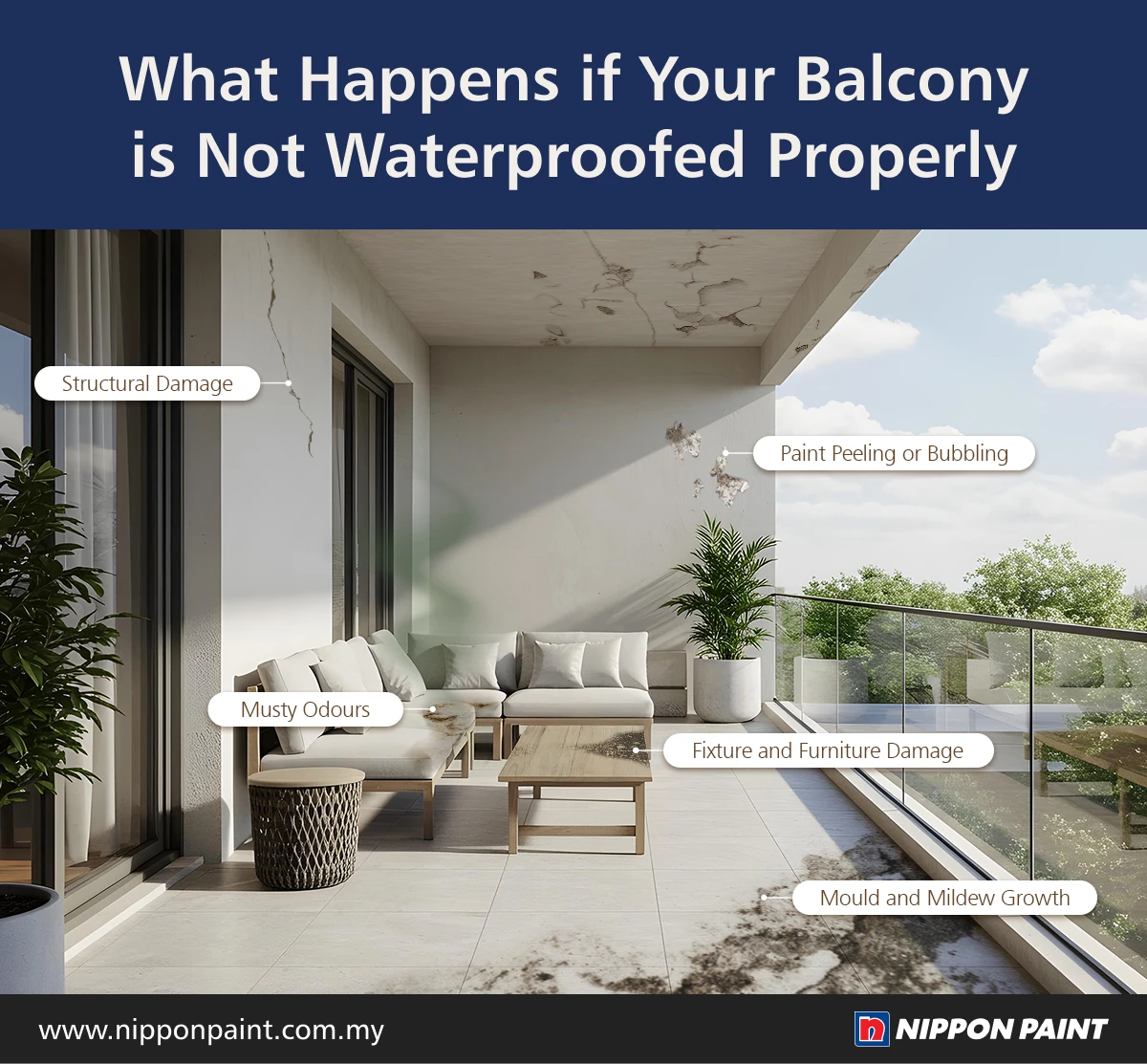
Over time, untreated leakage can lead to more serious consequences, including:
Structural deterioration, such as cracks or weakened concrete
Damage to flooring, fixtures, or furniture located below the balcony
Persistent musty odours caused by trapped moisture
These problems typically worsen gradually. What begins as a small leak can eventually require extensive work, such as removing tiles, repairing the substrate, or reapplying waterproofing layers across the entire balcony.
What to Do When Your Balcony Starts Showing Signs of Leakage
When a balcony begins to leak, the solution is rarely as simple as sealing the surface. Water damage often originates beneath the tiles or within the structure, which means the underlying condition must be properly assessed before repairs are carried out.
Depending on the severity of the issue, addressing leakage may involve minor repairs or more substantial renovation work. In some cases, problems such as poor floor slope, blocked drainage, or deteriorated waterproofing layers can require professional intervention.
General actions that homeowners typically consider include:
Inspecting the balcony surface for cracks, loose tiles, or damaged grout
Repairing localised damage before it spreads to surrounding areas
Consulting a waterproofing specialist when leakage persists or worsens
Considering a full waterproofing upgrade for long-term protection
Addressing the root cause early helps prevent repeated repairs and reduces the likelihood of more extensive structural damage.
Simple Maintenance That Makes a Big Difference
Waterproofing performs best when supported by regular maintenance. Small routine checks can significantly extend the life of the system and reduce the risk of unexpected problems.
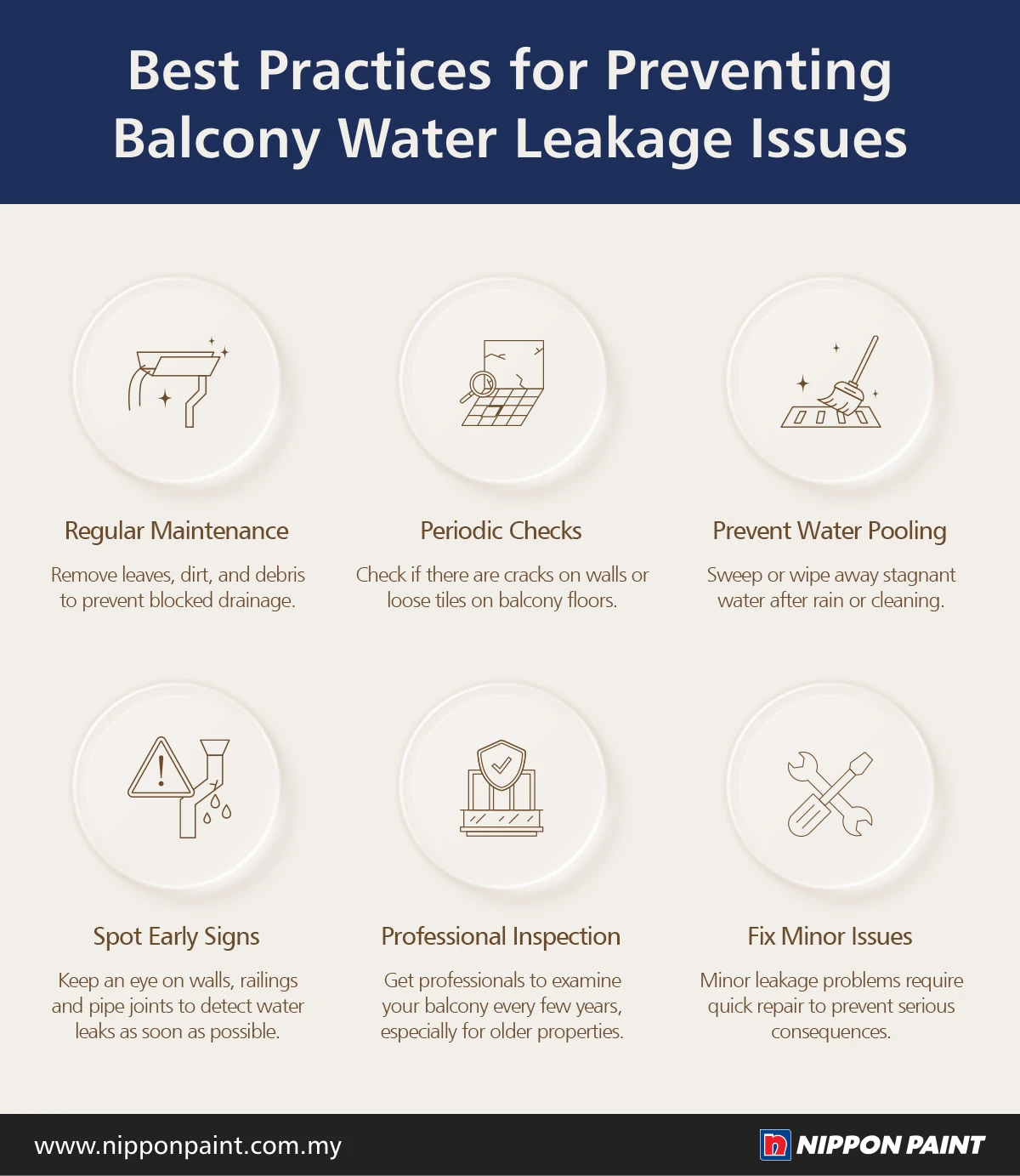
Practical maintenance habits include:
Keeping drainage outlets clear of leaves, dirt, and debris
Inspecting the surface periodically for cracks or loose tiles
Avoiding prolonged water pooling after rain or cleaning
Monitoring areas near walls, railings, and pipe joints for early signs of leakage
Scheduling professional inspections every few years, especially for older properties
Addressing minor damage promptly before it spreads
These simple steps require minimal effort but play a major role in preventing long-term structural damage. Regular inspections, prompt attention to small issues, and keeping drainage systems clear are habits that pay off over time, helping you avoid the disruption and expense of major repairs.
Balcony waterproofing is not just about preventing leaks. It is about protecting the structural integrity of your home and maintaining a safe, durable living environment. Regular inspection, timely repairs, and proper maintenance can significantly reduce the risk of costly damage and extend the lifespan of your balcony.
For homeowners facing recurring leakage or planning renovations, exploring a comprehensive waterproofing approach can provide greater peace of mind and long-term reliability.
FAQ
1. I just moved into a high-rise condo and noticed water stains on my ceiling below the balcony. Should I worry?
Yes. Water stains often indicate slow leakage, which can worsen over time. Using a reliable waterproofing solution, like Nippon Paint’s coatings, can help stop moisture from seeping through and protect both your balcony and the rooms below. Early action is usually cheaper than waiting for major repairs.
2. My balcony tiles sometimes feel damp after rain, even though the water drains away. Is that normal?
Persistent dampness usually means there is an underlying problem. Even if the surface looks dry or drains properly, tiny cracks, gaps in grout, or weakened waterproofing can let water seep into the concrete or floor beneath. Over time, this trapped moisture can lead to damage inside the structure, white powdery stains on the surface, or issues like floor finishes bubbling or peeling.
3. How often should balcony waterproofing be inspected or reapplied?
Balcony waterproofing should be checked regularly to ensure it remains in good condition and continues protecting the structure. Even though waterproofing systems are designed to last, their performance can be affected over time by weather exposure, movement, and wear.
Look out for early signs such as hairline cracks, loose or hollow tiles, water pooling, or areas that stay damp after rain. Catching these issues early helps prevent leaks, reduces repair costs, and extends the lifespan of the balcony waterproofing system.
4. I live in a high-rise with heavy rainfall. Are balconies more at risk than other areas?
Yes. Balconies are directly exposed to sunlight, rain, and temperature fluctuations, which cause materials to expand and contract, gradually weakening surfaces. In high-rise buildings, water accumulation can be amplified by wind-driven rain. Regular inspection and maintenance, combined with effective waterproofing, are essential to prevent leaks from escalating into structural problems.
5. I don’t see any leaks yet. Is waterproofing still necessary?
Yes. Visible damage often appears long after moisture has already started to penetrate the structure. Proactive waterproofing protects the balcony before problems develop, saving money and effort in the long run, especially in Malaysia’s humid and rainy climate.