



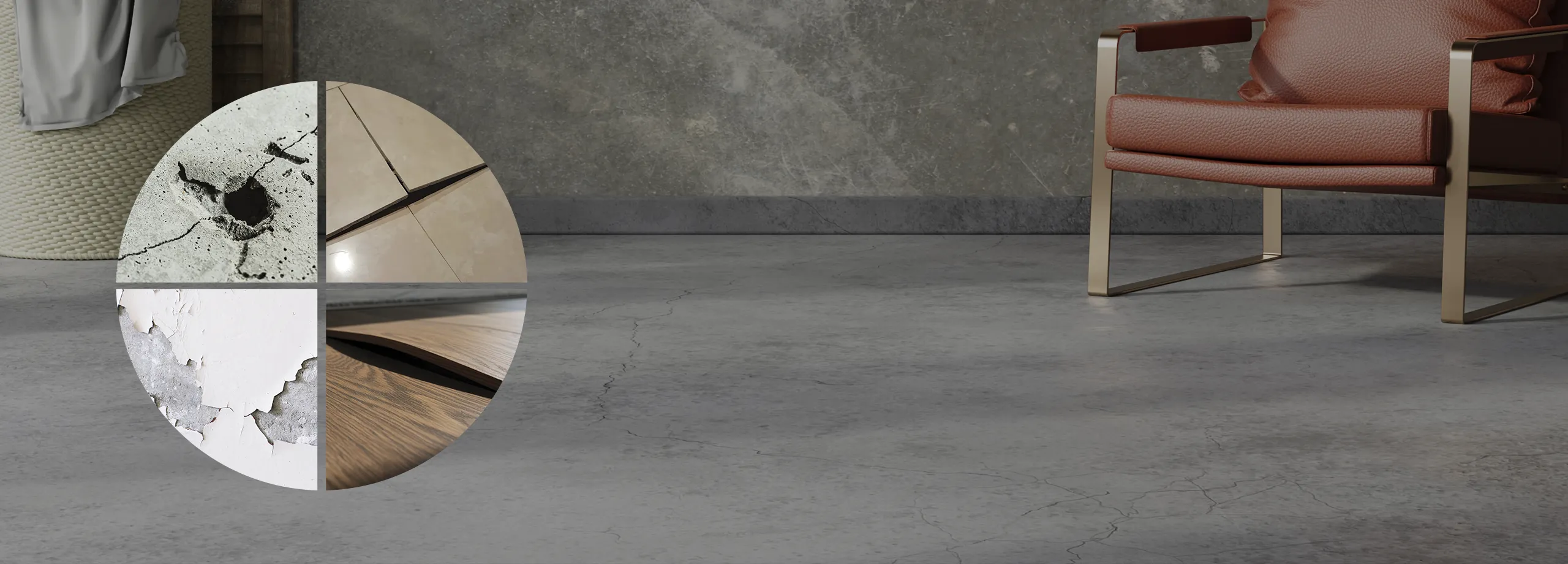
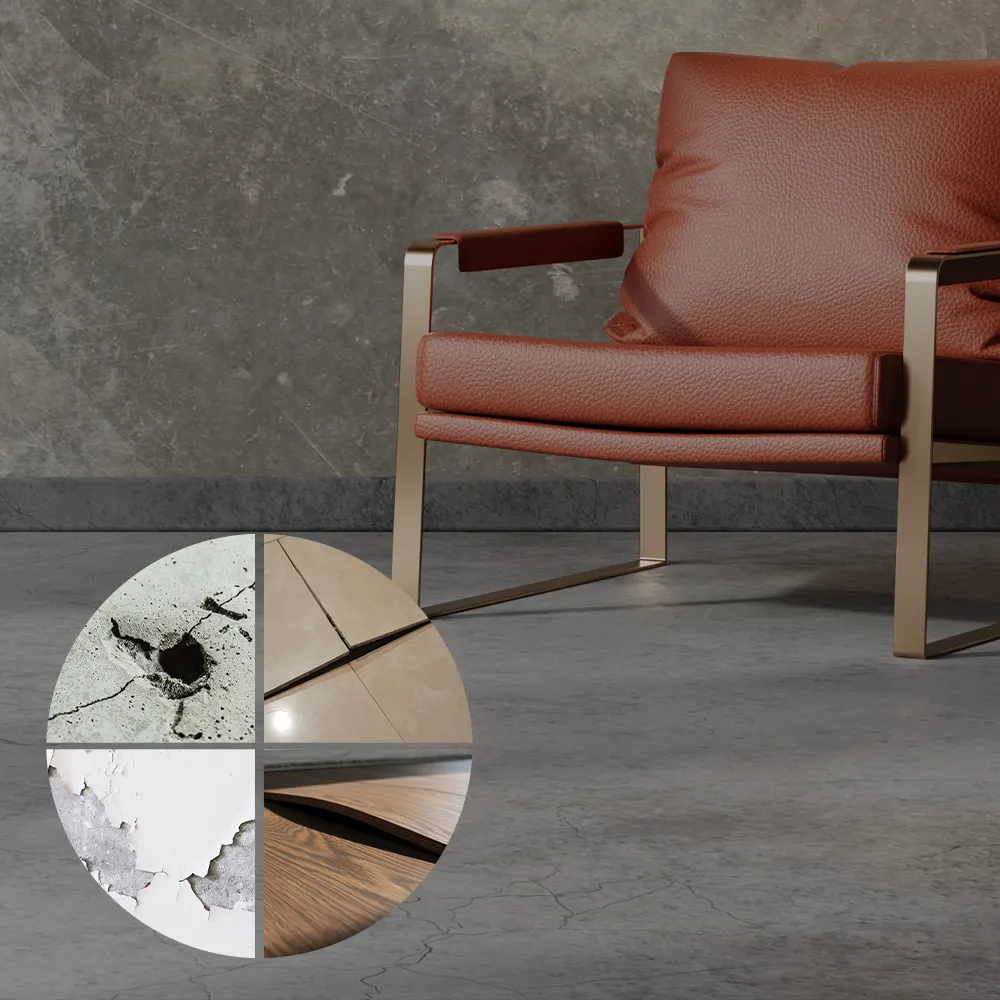
Whether you live in a terrace house in Subang or a high-rise condo in Kuala Lumpur, Malaysia’s tropical climate is one of the toughest conditions your floors must endure. Humidity levels can rise as high as 90%, and the constant temperature change puts great stress on flooring materials.
When floors are not treated to withstand these conditions, the moisture in the air and the concrete beneath them will eventually lead to failure.
Below are the most common flooring problems homeowners face and why humidity is the main culprit behind each one.
Unsightly cracks running across your floor are not only an eyesore but also a gateway for further damage. These fissures can appear in concrete slabs, or even tile grout lines, compromising the structural integrity of your floor covering.
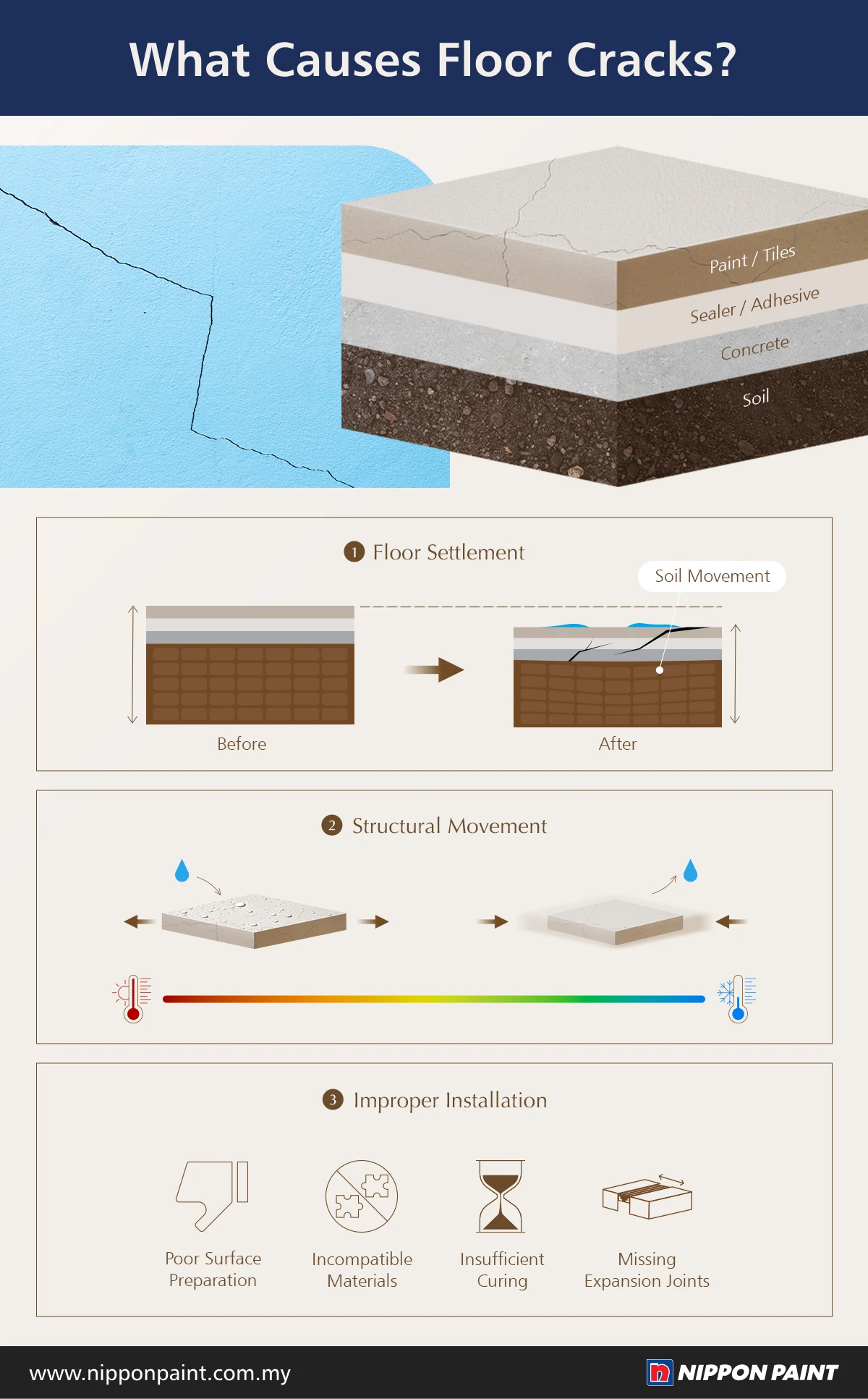
Causes :
i) Floor Settlement : The ground beneath a building is not completely static. It can shift, compress, or settle gradually due to soil movement, prolonged moisture exposure, or uneven weight distribution from the structure above. When the foundation adjusts to these changes, the floors must also respond to the movement. This adjustment often appears as cracks on the surface, signalling that the building is adapting to new ground conditions.
ii) Structural Movement : Fluctuations in heat and moisture put constant pressure on flooring materials. In tropical climates, high humidity causes floors to expand, while air-conditioning or dry conditions make them contract. Over time, this repeated movement weakens the floor and can lead to visible cracks, especially in areas exposed to frequent temperature changes.
ii) Improper Installation : Floors need proper preparation and installation to last. Poor surface prep, incorrect material mixing, insufficient curing, or missing expansion joints weaken their ability to handle stress. Over time, heavy use, temperature and moisture changes, and structural movement can turn small imperfections into cracks, buckling, or other serious damage.
Addressing floor cracks requires more than just a surface patch, it demands a system that seals the substrate and prevents moisture from traveling upward. Nippon Paint Bare-to-Finish Solution for Floor Crack is designed to provide that foundational protection, ensuring your floors remain stable and crack-free. Explore our full system here.
There is nothing quite as frustrating as stepping onto a floor that suddenly feels uneven, or worse, hearing a plank pop loose underfoot. This issue is particularly common with wood and vinyl flooring, where individual planks lose their grip and lift away from the subfloor.
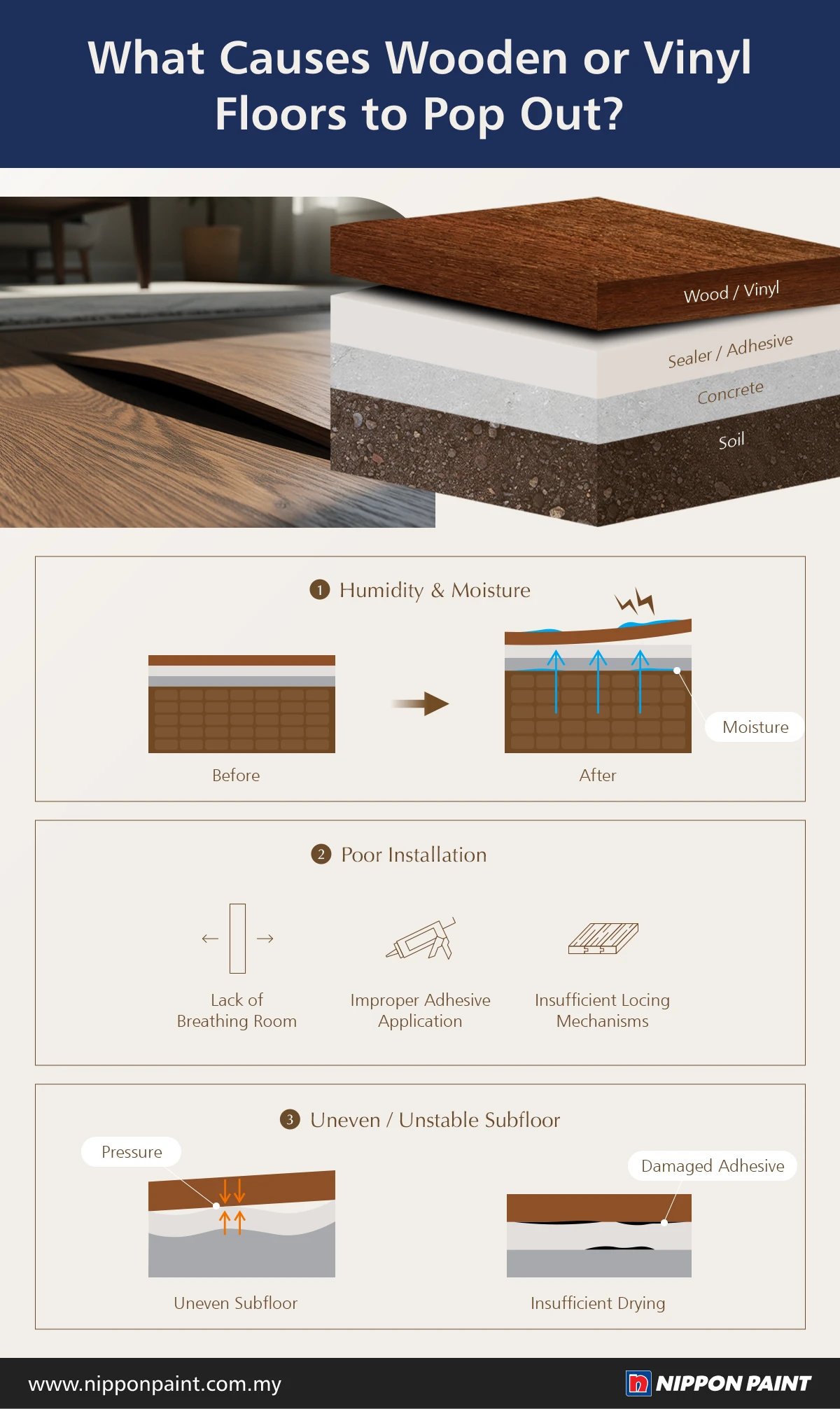
Causes:
i) Humidity and Moisture : Wooden flooring naturally absorbs moisture from the surrounding environment. High indoor humidity, leaks, spills, or damp subfloors can cause the planks to expand. If the flooring system lacks proper moisture management or space for natural movement, this swelling generates pressure that pushes the planks upward, leading to lifting, buckling, or uneven surfaces.
ii) Poor Installation : When floor planks are fitted too snugly against walls, they lack the necessary space to expand and contract naturally with changes in temperature and humidity. Improper adhesive application or insufficient locking mechanisms can intensify this problem, resulting in lifting, popping, or uneven floorboards.
iii) Uneven or Unstable Subfloor : If the subfloor is not level, properly dried, or structurally stable, it can form weak spots that place uneven stress on wooden planks. Under normal use, these areas may move or settle, leading to planks loosening, rising, or shifting out of alignment over time.
Keeping wood and vinyl planks securely in place requires a system that can withstand both moisture migration and thermal movement. Nippon Paint Bare-to-Finish Solution for Wooden Floor helps to create a strong, lasting bond that moves with your floors rather than against them. Explore our full system here.
You have invested time and effort into painting your floor, only to watch the coating lift, curl, and flake away over time. Peeling paint not only ruins the aesthetic of your space but also leaves the underlying concrete exposed and vulnerable to further moisture damage.
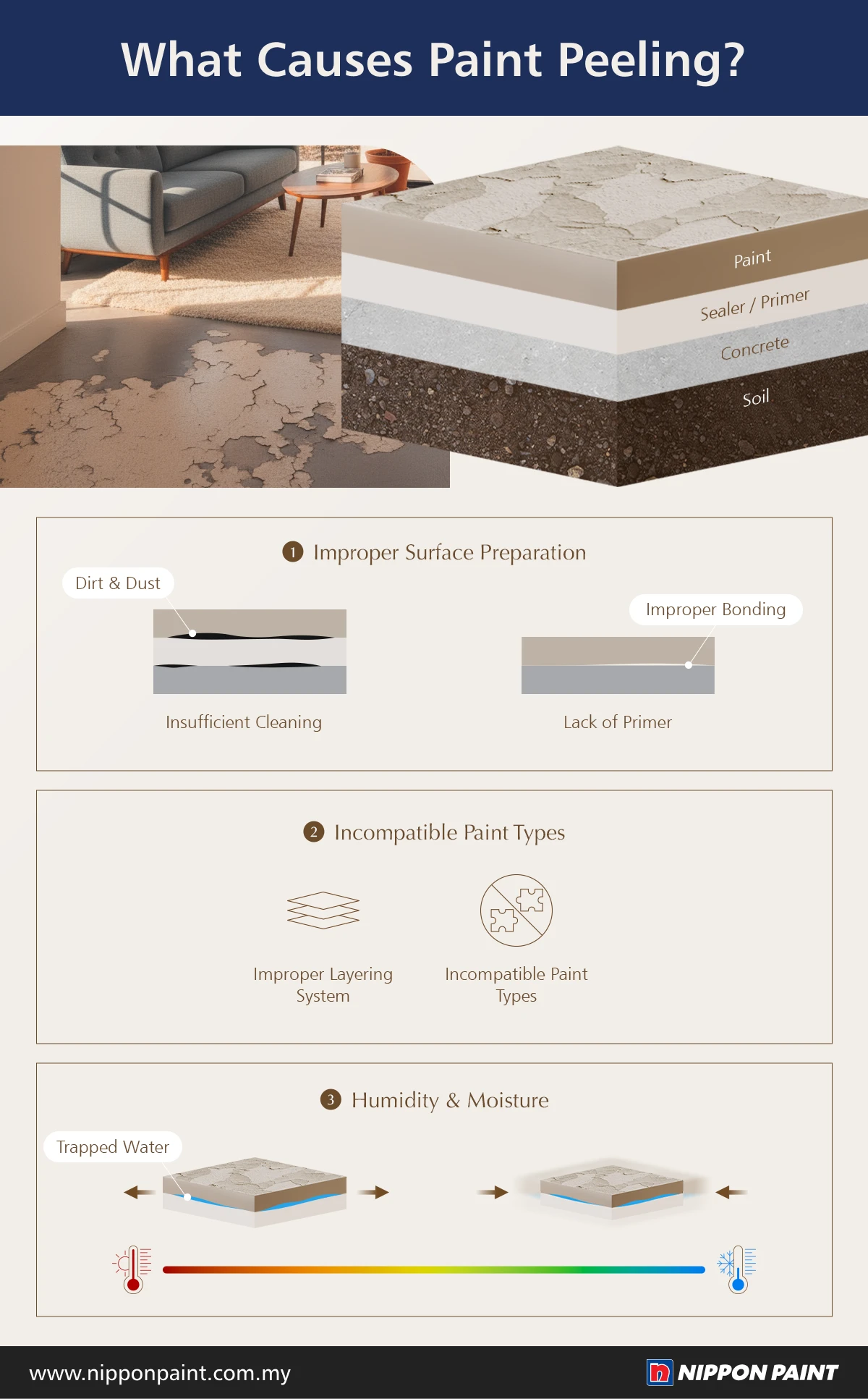
Causes :
i) Improper Surface Preparation: Paint adhesion depends on proper surface preparation. If the floor is dirty, damp, or dusty, or if a primer is skipped, the paint may gradually lift or peel. Cleaning the surface thoroughly, ensuring it is dry, and applying a compatible primer helps the paint bond properly and extend the life of the finish.
ii) Incompatible Paint Types: Make sure that the sealers, primers, and paints applied on your floor are formulated to work in combination. Different products have varying chemical and physical properties, and using incompatible types can compromise adhesion, resulting in peeling or other coating failures.
iii) Humidity and Moisture: When water becomes trapped beneath a paint layer, it can weaken the bond between the coating and the surface, leading to peeling. Temperature fluctuations further stress the paint, as surfaces expand and contract with heat and cold. Over time, this repeated movement can cause the paint to crack, lift, and peel.
Achieving a paint finish that stays intact means addressing the moisture problem before the first coat is applied. Nippon Paint Bare-to-Finish Solution for Paint Peeling on Floor provides a multi-layered approach that seals the substrate and creates a durable, long-lasting finish that resists peeling even in our high-humidity environment. Explore our full system here.
Whether from removed fixtures, dragged furniture, or general wear and tear, holes and pits in your floor create an uneven surface that collects dirt and detracts from the overall appearance. In more severe cases, these imperfections can worsen over time, leading to larger areas of deterioration.
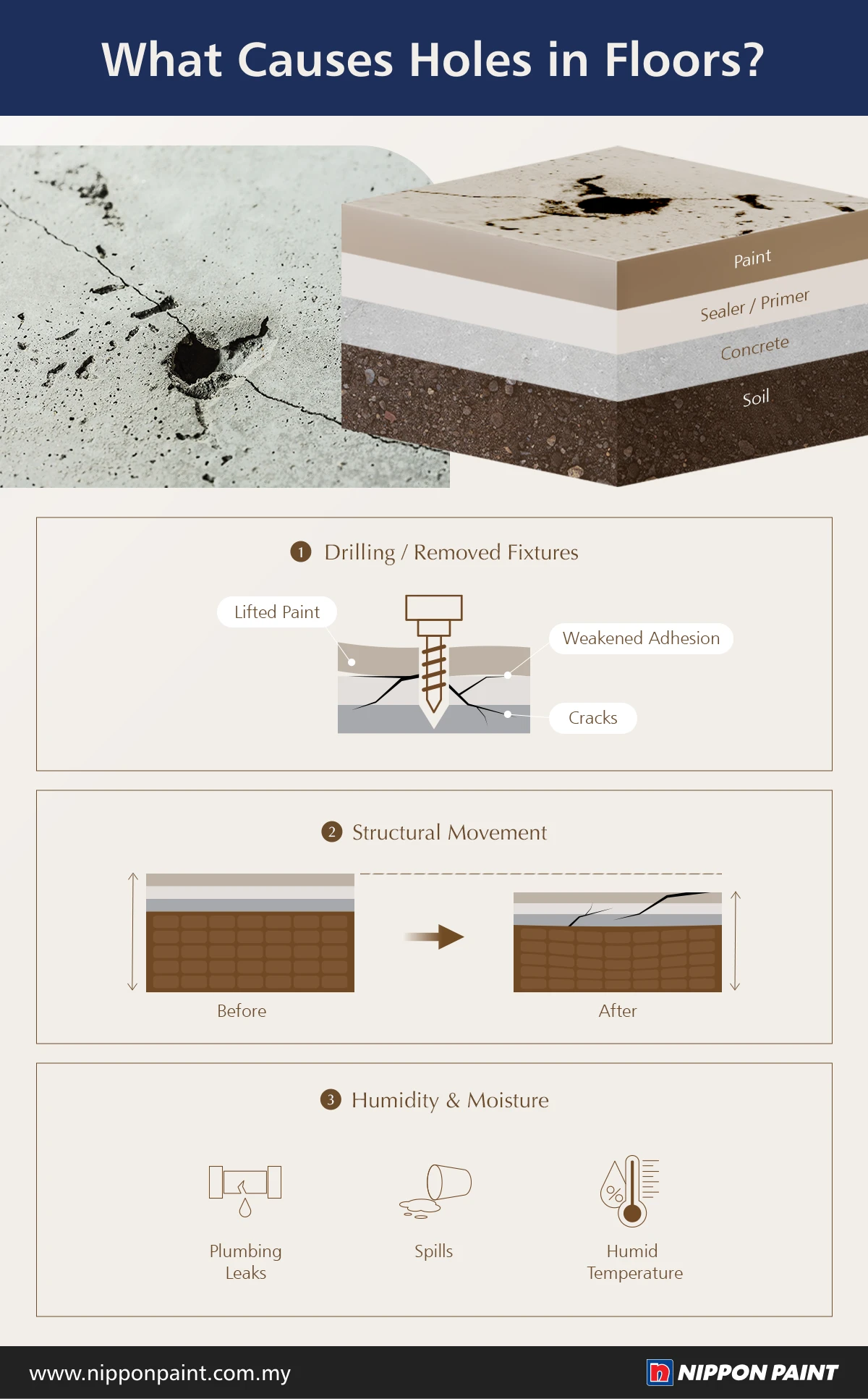
Causes :
i) Drilling or Removed Fixtures : Drilling or removing fixtures can mechanically damage the paint film and underlying substrate. The force applied may create cracks, chips, or localised stress, weakening adhesion and eventually causing cracking, lifting, or peeling around the affected areas.
ii) Structural Movement : Buildings constantly adjust to fluctuations in heat, cold, and the stresses of everyday weight. This natural movement can create tiny cracks in walls and floors, and if left unaddressed, these cracks can grow larger, eventually forming visible holes.
iii) Humidity and Moisture : Excess moisture from plumbing leaks, spills, or persistent indoor humidity can slowly penetrate plaster and concrete surfaces, compromising their structural integrity. As the material weakens, it may soften, crumble, and eventually form small holes.
Filling holes is only half the solution, preventing them from reappearing requires a system that strengthens and protects the concrete surface. Nippon Paint Bare-to-Finish Solution for Holes in Floor not only helps create a smooth, even foundation but also fortifies the substrate against the moisture-related deterioration that leads to spalling and pitting. Explore our full system here.
One of the most alarming flooring issues is tile buckling, often announced by a sudden loud crack and the sight of tiles lifting or popping up from the floor. This problem can happen suddenly and often affects large areas, making it one of the most disruptive and costly issues to address.
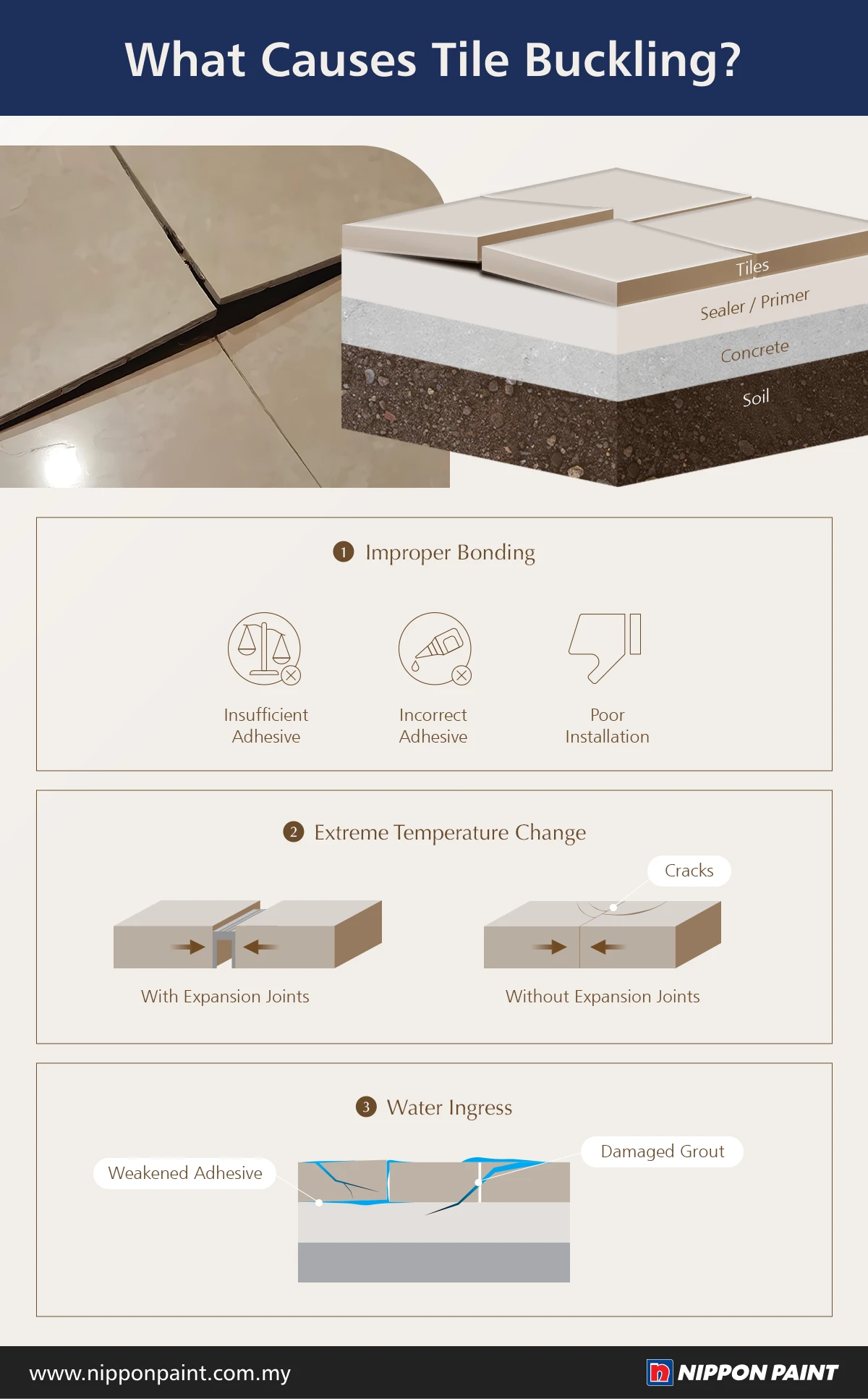
Causes :
i) Improper Bonding : Tile buckling can occur when tiles are not properly bonded to the substrate, whether due to insufficient adhesive coverage, the wrong adhesive type, or poor installation techniques. Without a strong, uniform bond, the tiles can lose their grip and eventually lift when subjected to movement, weight, or environmental stress.
ii) Extreme Temperature Change : Without sufficient expansion joints or flexible adhesives, temperature fluctuations cause tiles and their substrates to expand and contract. Over time, this movement generates stress beneath the tiles, which can lead to cracking, lifting, or buckling, particularly in outdoor or sun-exposed areas.
iii) Water Ingress : When water seeps beneath tiles through cracks, damaged grout, or inadequate waterproofing, it can weaken the adhesive and cause the substrate to expand. Over time, this internal pressure pushes the tiles upward, resulting in lifting, tenting, or buckling.
Preventing tile buckling requires a flooring system that accommodates the natural expansion and contraction caused by our tropical climate. Nippon Paint Bare-to-Finish Solution for Tile Buckling helps your tiles stay exactly where they belong. Explore our full system here.
Small bubbles or blisters forming beneath your floor paint are more than just a cosmetic flaw, they are a clear warning sign that something is wrong beneath the surface. These bubbles can grow over time, eventually bursting and leaving behind unsightly patches of exposed, damaged concrete.
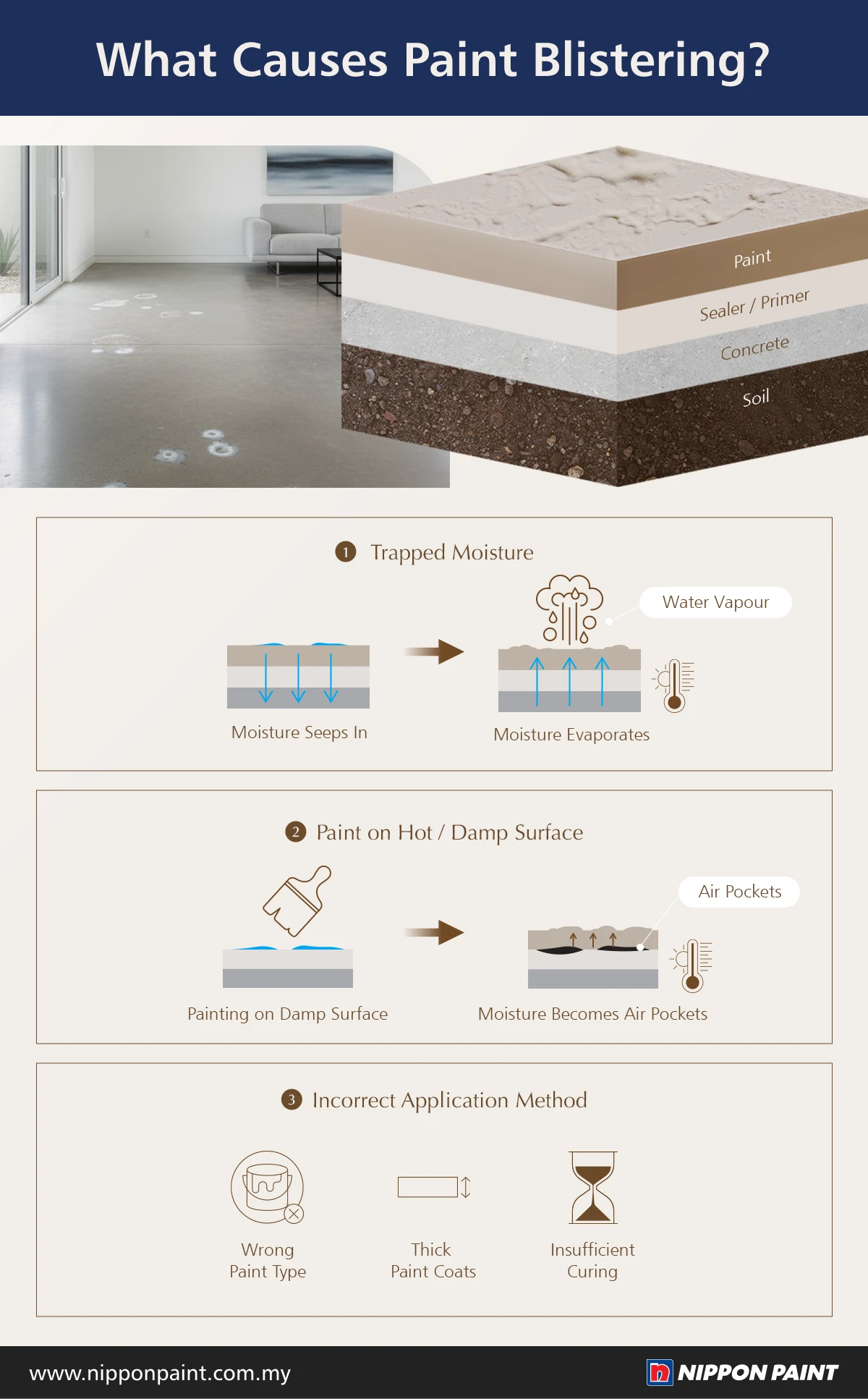
Causes :
i) Trapped Moisture : Moisture from plumbing leaks, condensation, or excessive indoor humidity can get sealed under the paint. As the surface heats up, the trapped water expands into vapour, forming bubbles that appear as blisters on the coating.
ii) Painting on a Hot or Damp Surface : When paint is applied to a damp surface or one exposed to strong sunlight, moisture and solvents can become trapped under the film. As the trapped substances evaporate, they form air pockets that push against the paint, causing bubbling or blistering.
iii) Incorrect Paint or Application Method : Using the wrong type of paint, applying coats that are too thick, or repainting before the previous layer has fully cured can prevent proper drying. This trapped moisture or solvent can cause bubbles to form, resulting in paint blisters.
Blistering is a clear signal that moisture is trapped where it shouldn’t be. Nippon Paint Bare-to-Finish Solution for Paint Blistering on Floor is designed with this challenge in mind, offering a solution that allows for proper moisture control while delivering a flawless, bubble-free finish. Explore our full system here.
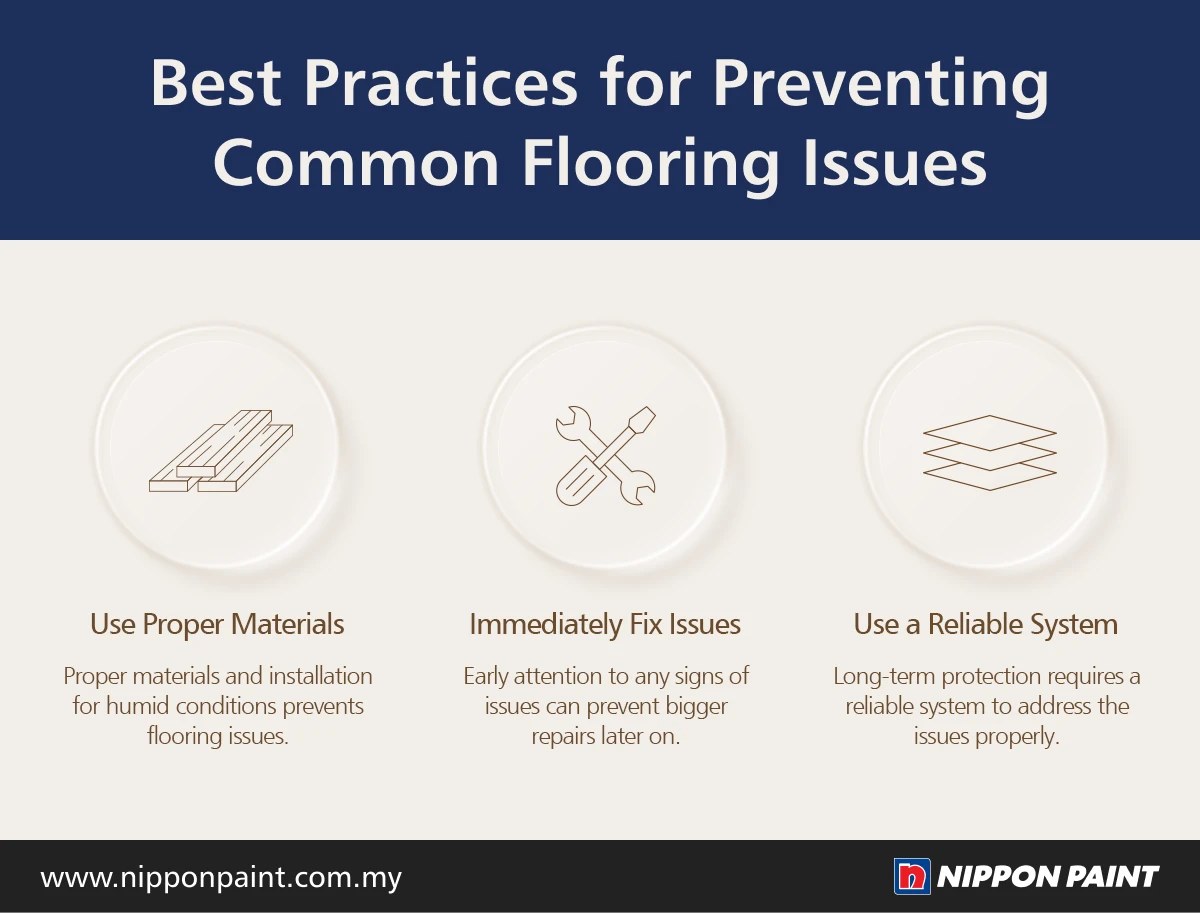
All of these common flooring problems share the same root cause; Malaysia’s high humidity and temperature fluctuations. Moisture rising from the concrete can cause blisters and peeling, while thermal stress forces materials to expand and contract, leading to cracks, lifting, or buckling.
Addressing these issues effectively requires a solution that works at the foundational level. For a complete approach to protecting your floors, explore the full guide on Nippon Paint Bare-to-Finish Solution for Flooring. This system is specifically designed to tackle moisture and bonding challenges at the source, providing durable protection for you to create your most beautiful home.
Creaking happens when floorboards rub against each other or the subfloor due to expansion, contraction, or loosening. Occasional creaks are normal, but constant or worsening sounds may indicate gaps forming underneath, which could lead to more noticeable warping or damage if not addressed
Tile cracks can result from minor structural movement, thermal expansion, or shifts in the grout. Small cracks aren’t usually dangerous, but if they spread or allow water to seep underneath, they can weaken the tiles and the adhesive layer over time, so monitoring and timely repairs are important.
Damp conditions and poor airflow create an ideal environment for mold. To prevent it, ensure the floor dries fully by opening windows, using exhaust fans, or increasing airflow. Regular drying and keeping corners and edges clear can prevent mould from forming and spreading.
Absolutely. Using harsh chemicals, excessive water, or abrasive cleaning tools can damage the finish, weaken adhesives, and reduce the lifespan of your flooring. For example, overly wet mopping on timber can seep into joints, causing expansion, while strong detergents can strip floor coatings. Following manufacturer-recommended cleaning methods and using soft cloths or mops preserves both appearance and durability.
Note: The colour shades displayed are indicative and not precise representations of our actual paint colours.
© 2026 NIPPON PAINT (MALAYSIA) SDN. BHD. (196701000578) All Rights Reserved