In Malaysia, the tropical climate presents unique challenges for exterior painting. With high humidity, intense sunshine, and frequent rain, many homeowners experience issues like staining and colour fading within just a few years. This rapid deterioration underscores the importance of choosing the right paint and following the proper painting techniques. This guide will walk you through the essential steps for painting your exterior walls, focusing on the benefits of using Nippon Paint products designed to withstand Malaysia’s harsh weather conditions. Let’s explore how to protect and beautify your home’s exterior.
Key Takeaways
Thoroughly cleaning exterior walls before painting helps ensure better paint adhesion and a longer-lasting finish.
Repairing cracks, holes, and damaged areas prevents moisture intrusion and creates a smooth surface for painting.
Applying a sealer helps reduce paint absorption, improves adhesion, and protects walls from moisture-related issues.
Choosing weather-resistant exterior paint is essential for protecting walls against Malaysia’s heat, humidity, rain, and UV exposure.
Following a 1+2 painting system with one coat of sealer and two coats of topcoat provides enhanced durability and long-term protection.
Proper preparation and quality materials can help prevent common issues such as peeling, mould growth, staining, and colour fading.
Preparing your wall by cleaning it thoroughly is vital to achieving an even, long-lasting finish. A clean surface ensures that the paint adheres properly, resulting in a smooth, durable finish that withstands the elements over time.
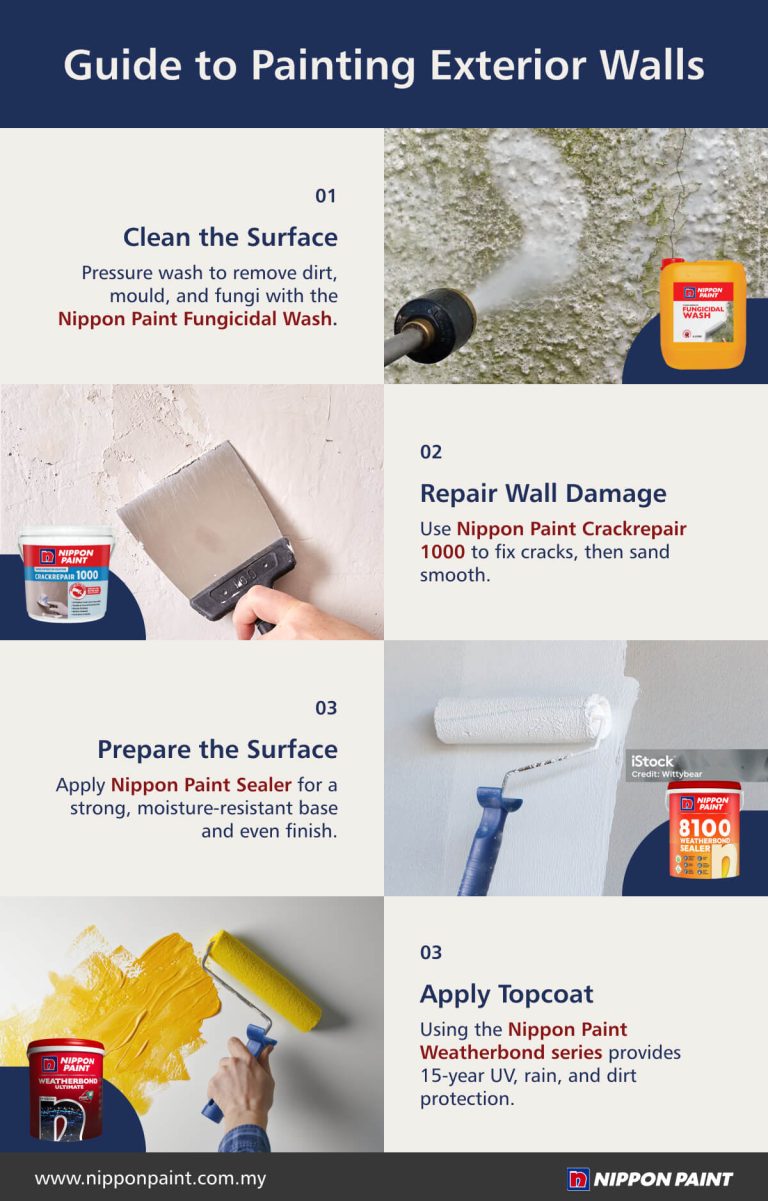
Use a pressure washer or hose with a cleaning solution, such as Nippon Paint Fungicidal Wash, to remove any dirt, mould, and fungal growth. This step is essential in Malaysia’s humid climate, where mould and mildew can develop quickly. After washing, allow the wall to dry completely for at least 24 hours before moving on to the next steps. This drying period ensures that the paint will adhere effectively, giving you a strong, lasting coat.
ii) Repair Existing Damage on the Wall
To make sure your wall is smooth and ready for painting, start by fixing any cracks or damaged areas. First, gently open up the cracks a little using a chisel or hammer. This helps to remove any loose material and gives the filler something to hold onto. Think of it as making a small, shallow line along the crack so that the filler can settle in securely.
Next, use a wire brush or scraper to clear away any peeling paint, dust, or debris. This will help ensure a strong bond between the wall and the repair materials. Then, apply Nippon Paint Crackrepair 1000 with a putty knife. This ready-to-use crack filler is ideal for repairing medium cracks, tiny holes, and imperfections on plaster, cement render, and painted surfaces. It offers excellent workability, good adhesion, and resistance to weather and alkalinity, making it a reliable choice for both interior and exterior walls.
Also, look for areas where cement may have eroded or crumbled around windows or other edges. These “cement drop-offs” can leave holes that should be filled in to prevent water from seeping in. Once all repairs are made, allow the filler to dry fully before gently sanding the area to create a seamless, smooth surface.
iii) Prepare the Wall Surface for Paint
Applying a sealer to your exterior wall is an essential step for long-lasting results. A Nippon Paint Sealer is particularly effective on surfaces that are porous, chalky, or prone to moisture issues, like bare drywall, plaster, or masonry. A sealer prevents the wall from absorbing too much paint, which can lead to uneven finishes, and it provides a barrier against moisture, it is crucial for homes in Malaysia’s humid climate. By applying a sealer, you create a strong foundation for the top coat, enhancing its adhesion and durability.
For more information on the difference between sealer paint and primer paint, you can read the article here.
iv) Apply the Top Coat
Now, you’re ready to paint! Choosing high-quality exterior paint, such as the Nippon Paint Weatherbond® Series, is essential for enduring Malaysia’s challenging climate. Formulated with advanced Quartz and Fibra Technology, the Weatherbond® Series provides a tough and durable paint film that resists UV radiation, rain, and dirt. This ensures superior protection against peeling, mould growth, and colour fading, keeping your walls vibrant and fresh for up to 15 years.
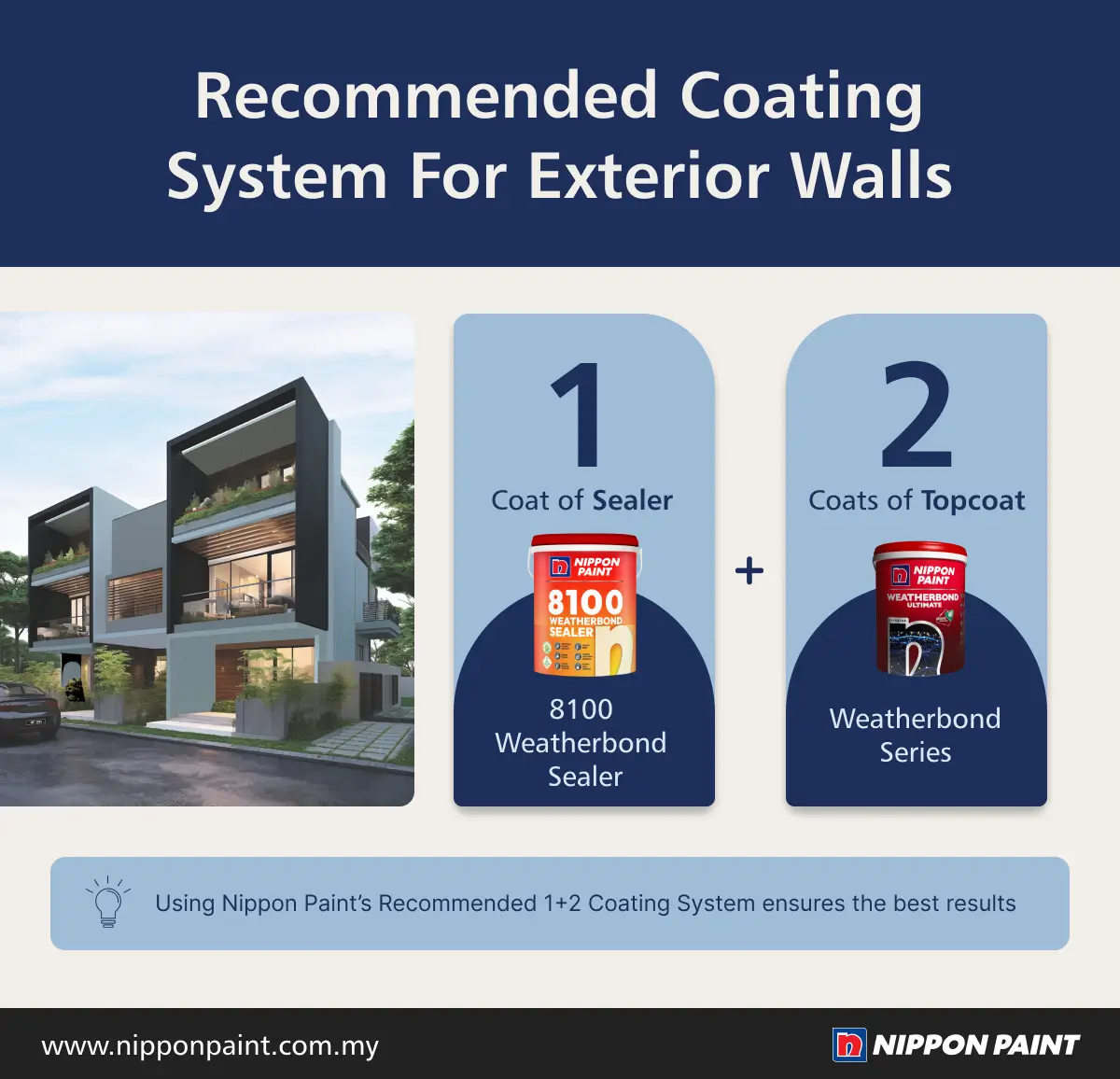
In addition, Nippon Paint recommends a 1+2 coating system for maximum durability. This involves applying one layer of sealer to create a strong foundation, followed by two layers of topcoat for added thickness and resilience. This system enhances the paint’s resistance to humidity, rain, and UV rays, ensuring a long-lasting, protective finish that maintains your home’s aesthetic appeal over time.
Painting your exterior walls in Malaysia requires careful preparation and the right products to withstand the region’s demanding weather. By following these few steps, cleaning, repairing, sealing, and applying a high-quality top coat, you can achieve a beautiful, long-lasting finish that will protect your home for years.
Investing in quality materials, like Nippon Paint’s Weatherbond® Series, and taking the time to prepare properly will not only enhance your home’s curb appeal but also prevent damage from elements like mould, mildew, and UV rays. With a thoughtful approach, you can transform and protect your home, keeping it vibrant and fresh for years to come.
Conclusion
Investing in quality materials, like Nippon Paint’s Weatherbond® Series, and taking the time to prepare properly will not only enhance your home’s curb appeal but also prevent damage from elements like mould, mildew, and UV rays. With a thoughtful approach, you can transform and protect your home, keeping it vibrant and fresh for years to come.
FAQs
1. Why is it important to clean exterior walls before painting?
Cleaning removes dirt, dust, mould, mildew, and other contaminants that can prevent paint from adhering properly. If these substances are left on the wall, the paint may peel, bubble, or wear out prematurely. In Malaysia’s humid climate, mould and fungal growth are particularly common, making thorough cleaning an essential first step for achieving a smooth and durable finish.
2. How long should I wait after washing the wall before painting?
It is recommended to allow the wall to dry completely for at least 24 hours after cleaning. Painting on a damp surface can trap moisture beneath the paint film, which may lead to blistering, peeling, poor adhesion, or mould growth later on. A fully dry surface helps ensure the paint bonds properly and lasts longer.
3. Do I need to repair cracks before painting exterior walls?
Yes. Cracks, holes, and damaged areas should always be repaired before painting. These imperfections can allow water to seep into the wall, causing further deterioration over time. Filling cracks and sanding repaired areas smooth creates a more even surface and helps improve the appearance and durability of the finished paint job.
4. What is the purpose of a sealer?
A sealer acts as a foundation coat that prepares the wall for painting. It helps reduce excessive paint absorption on porous surfaces, improves the adhesion of the topcoat, and creates a protective barrier against moisture. This is particularly beneficial for exterior walls exposed to rain, humidity, and fluctuating weather conditions.
5. When should a sealer be used?
A sealer is typically recommended for bare masonry, plaster, drywall, chalky surfaces, or walls that have moisture-related issues. These surfaces can absorb paint unevenly, resulting in patchy finishes and reduced durability. Applying a sealer first helps create a more consistent surface for painting and improves overall performance.