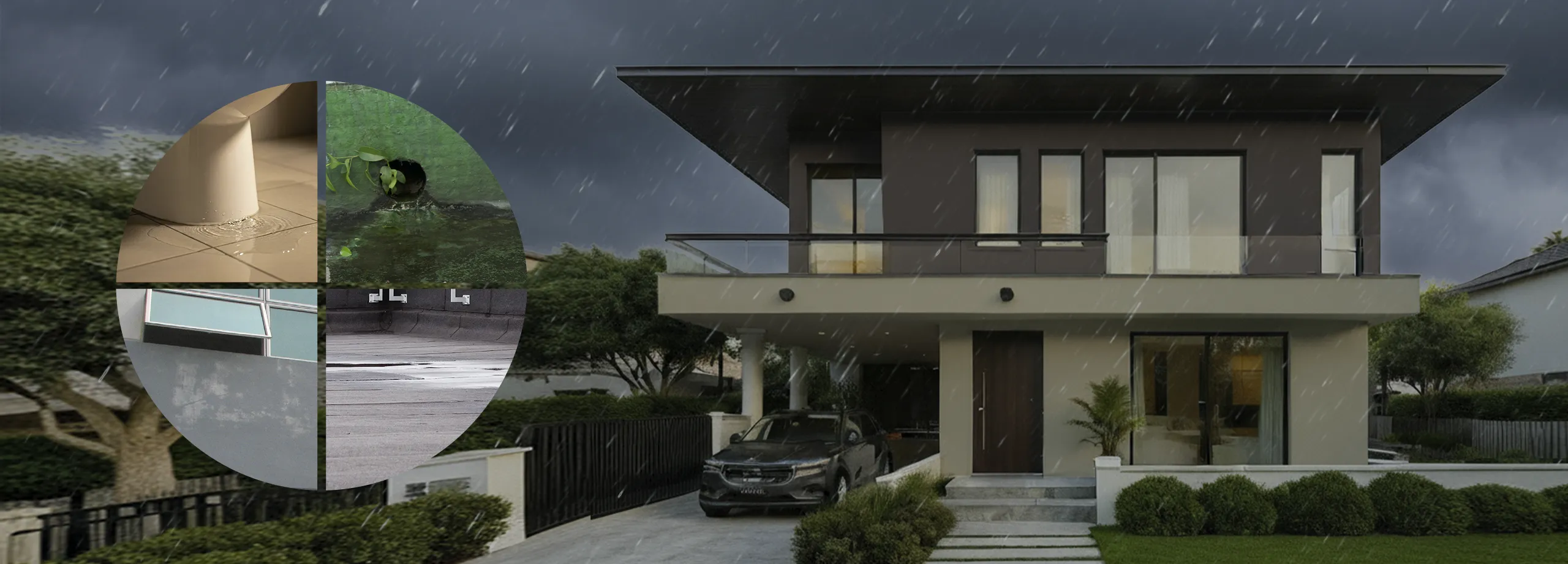
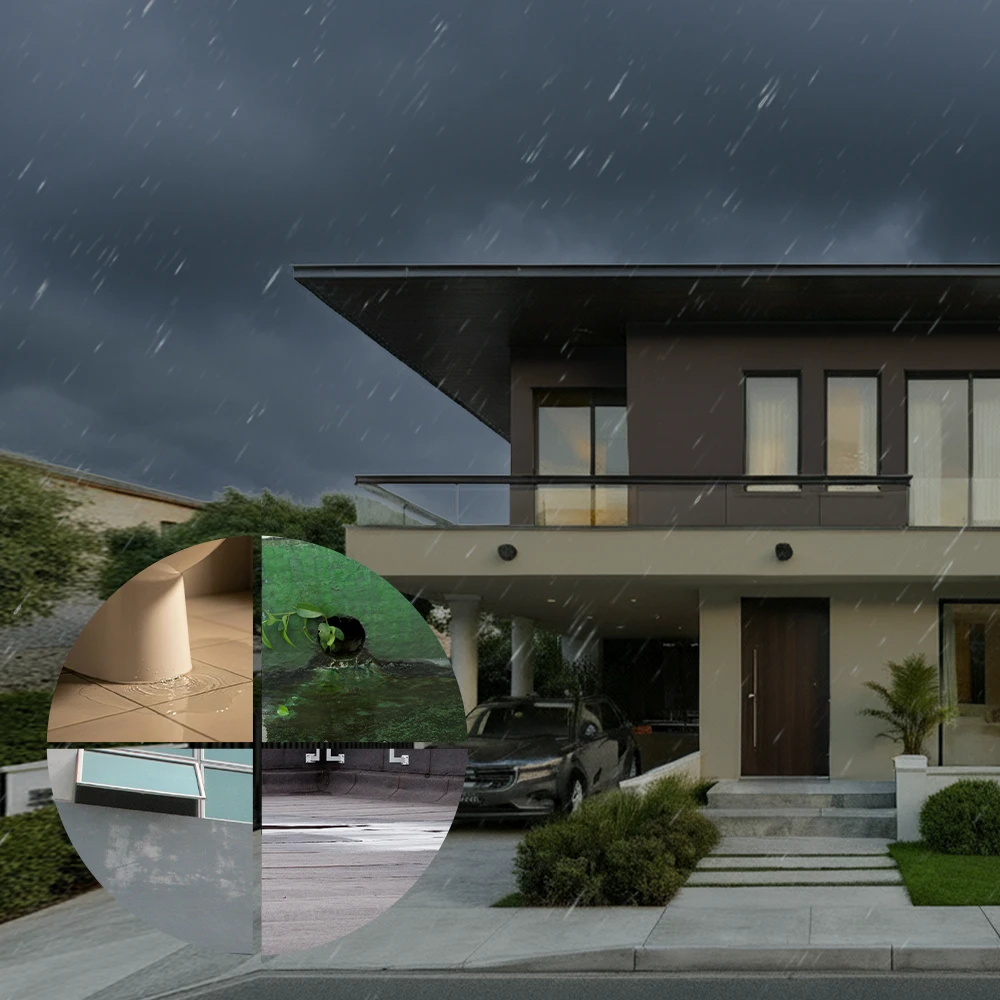
Waterproofing is the primary defense against water intrusion, securing a building’s roof, walls, foundations, and wet areas. Beyond preventing leaks, it preserves structural integrity and minimises long-term maintenance costs. In high-humidity, high-rainfall regions like Malaysia, effective waterproofing is non-negotiable for protecting surfaces under constant moisture stress.
A joint study by Nippon Paint Malaysia and the Malaysian Institute of Property and Facilities Managers (MIPFM) reveal a significant vulnerability in regional infrastructure:
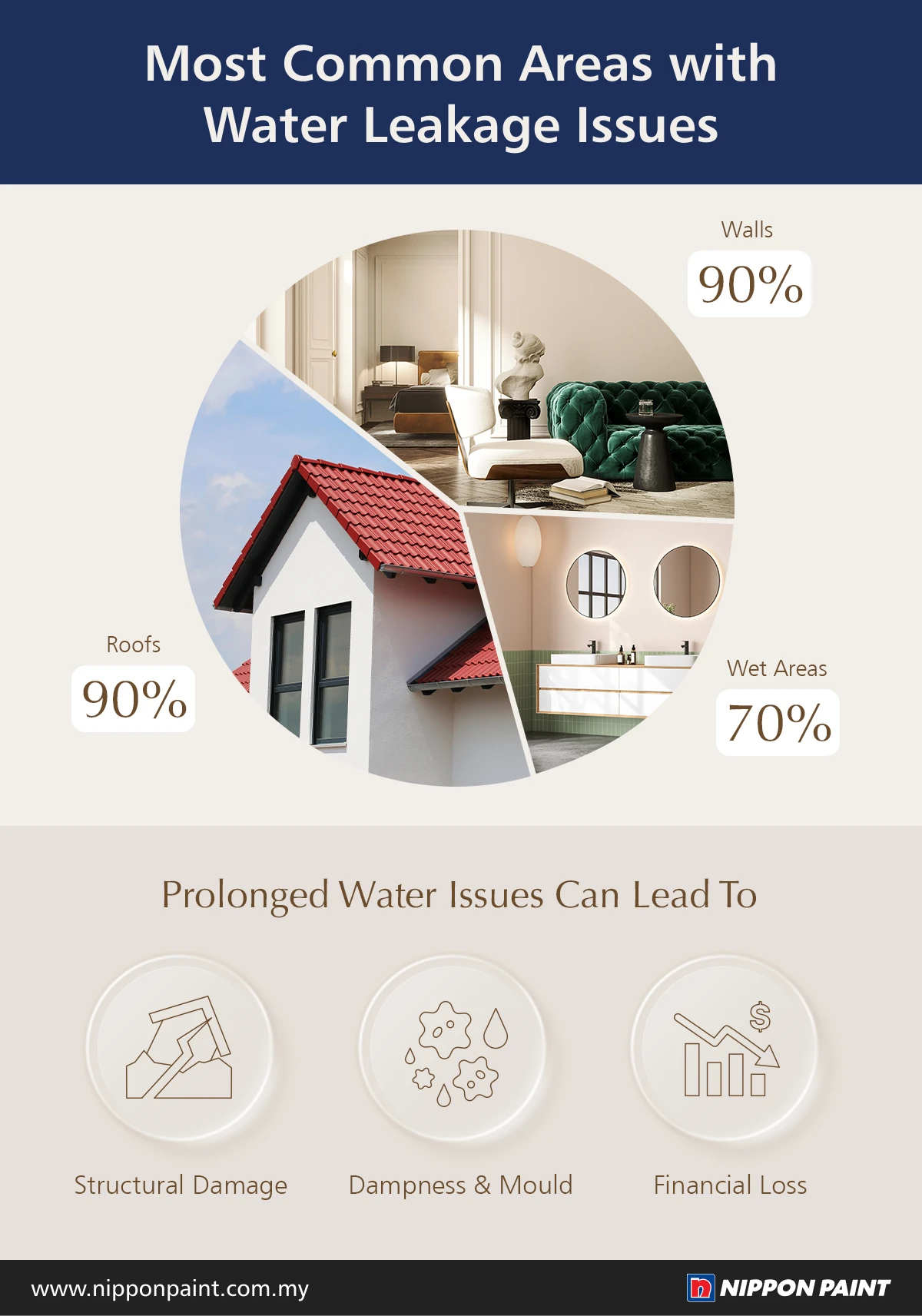
90% of respondents experience roof leaks due to poor drainage, worn membranes, or rainwater pooling
90% suffered from wall seepage
70% faced leaks in bathrooms and wet areas
When waterproofing is poorly designed, improperly installed, or reaches the end of its lifespan, water infiltrates building materials. This leads to a destructive cycle of:
Structural Damage: Weakening of concrete and corrosion of reinforcement steel
Dampness & Mould: Compromised indoor air quality and aesthetic degradation
Financial Loss: Escalating repair costs from unaddressed seepage
Early identification of warning signs allows property owners and professionals to intervene before minor leaks evolve into catastrophic structural failures.
Key Takeaways
Waterproofing is essential for protecting buildings from moisture intrusion.
Common waterproofing issues often start with small problems.
Poor drainage and surface design can lead to long-term water exposure
Cracks in exterior walls can allow rainwater to enter building structures
Early detection and timely repairs help prevent costly damage
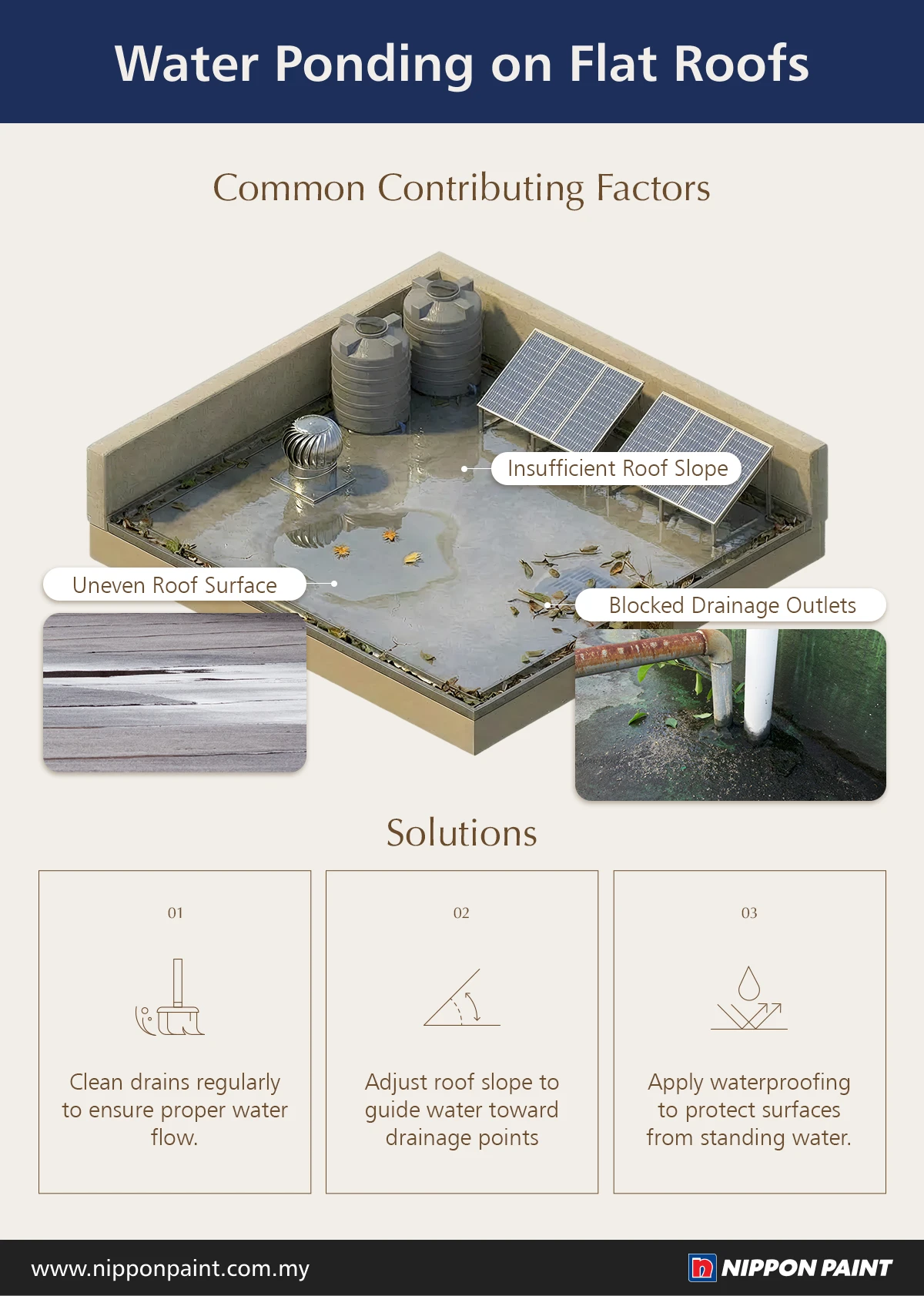
Water ponding on flat roofs occurs when rainwater collects and remains on the roof surface instead of draining away efficiently. This typically happens when water does not flow properly toward drainage outlets. Over time, stagnant water accelerates the deterioration of roofing materials and increases the risk of leaks.
Common Contributing Factors:
Insufficient roof slope: When a roof is not designed with adequate slope, rainwater cannot flow naturally toward drainage outlets and may begin to accumulate on the surface.
Blocked drainage outlets: Leaves, debris, and dirt can block roof drains, preventing water from draining properly after rainfall.
Uneven roof surfaces: Over time, structural settlement or construction imperfections may create depressions where water begins to collect.
Practical solutions:
Inspect and clean drains regularly to ensure proper water flow.
Adjust roof slope where possible to guide water toward drainage points.
Apply durable water-resistant coatings or membranes to protect surfaces from standing water.
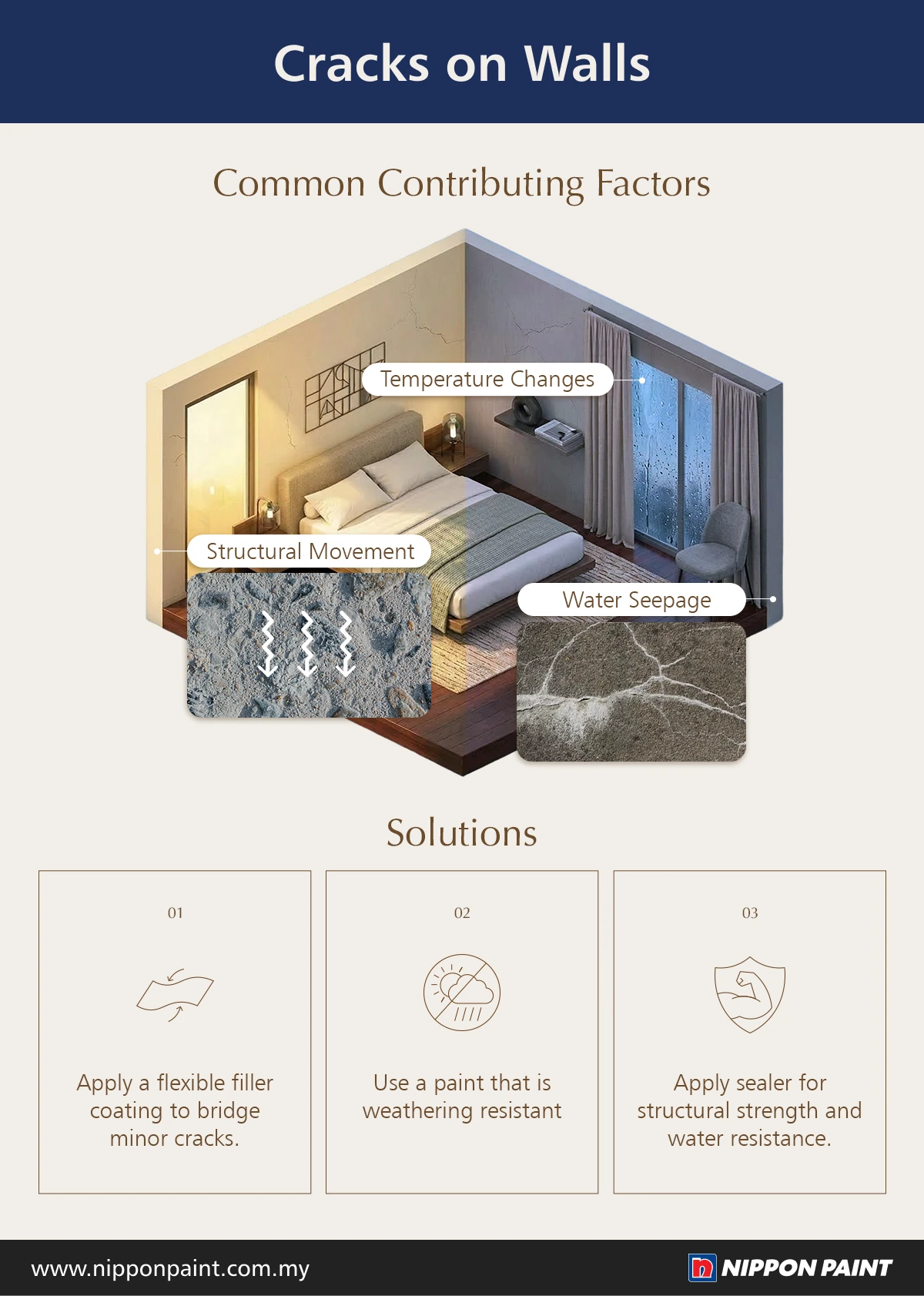
Exterior walls are continuously exposed to weather conditions such as sunlight, rain, humidity, and temperature changes. Over time, these environmental factors place stress on building materials, causing small hairline cracks to appear on the wall surface.
Common Contributing Factors:
Temperature expansion and contraction: Changes in temperature cause building materials to expand during hot weather and contract when temperatures drop. Over time, this repeated movement can result in small cracks on the wall surface.
Structural movement: Buildings naturally experience minor movement or settlement over time. This movement can place stress on wall surfaces and lead to cracking.
Water seepage : Water seepage occurs when rainwater or moisture penetrates tiny cracks, joints, or porous areas in exterior walls and floors. Over time, this persistent intrusion weakens the bonding materials within the surface, gradually leading to the formation of small cracks and compromising structural integrity.
Practical solutions:
Use flexible filler coatings that can adapt to small wall movements and bridge minor cracks.
Apply durable paints with excellent defense against temperature changes to prevent new cracks.
Restore larger damaged areas with suitable sealers to maintain structural strength and water resistance.
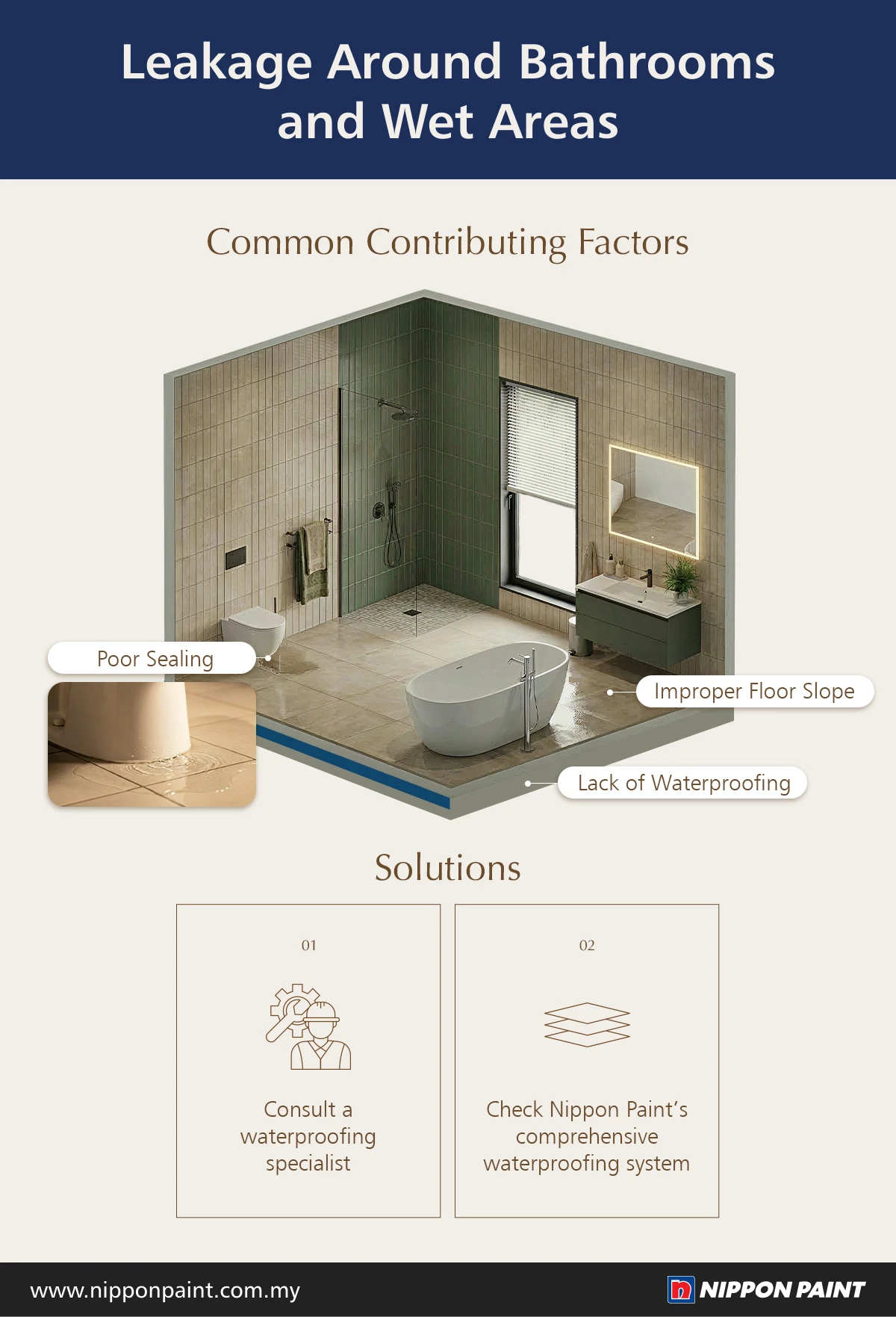
Bathrooms, kitchens, and other wet areas are regularly exposed to water. Without proper waterproofing beneath floor and wall finishes, water can gradually seep through tile joints and penetrate the structural layers underneath.
Common Contributing Factors:
Lack of waterproof membrane beneath tiles : Without a proper waterproof layer beneath the tiles, water can seep through grout lines and gradually make its way into the floor slab. In toilets, waterproofing membranes typically start to lose their effectiveness after 10 to 15 years of service.
Improper floor slope : If the floor surface is not designed with sufficient slope toward drainage outlets, water may collect and remain on the surface. Prolonged water ponding is a known cause of surface damage, accelerating deterioration and leading to cracks over time.
Poor sealing around plumbing penetrations : Small gaps around pipes, drains, or joints may allow water to slowly seep into surrounding areas. Find out more about our solution on how to repair leaking pipe joints.
Issues like improper floor slope or leaks around pipe joints can require major renovation to resolve. For bathrooms and other wet areas, it’s best to consult a waterproofing specialist to determine the right approach. Nippon Paint offers a comprehensive system designed for floors, walls, and pipe joints to address water leakage effectively. Explore more on our full system here.
Balcony and Flat Roof Waterproofing
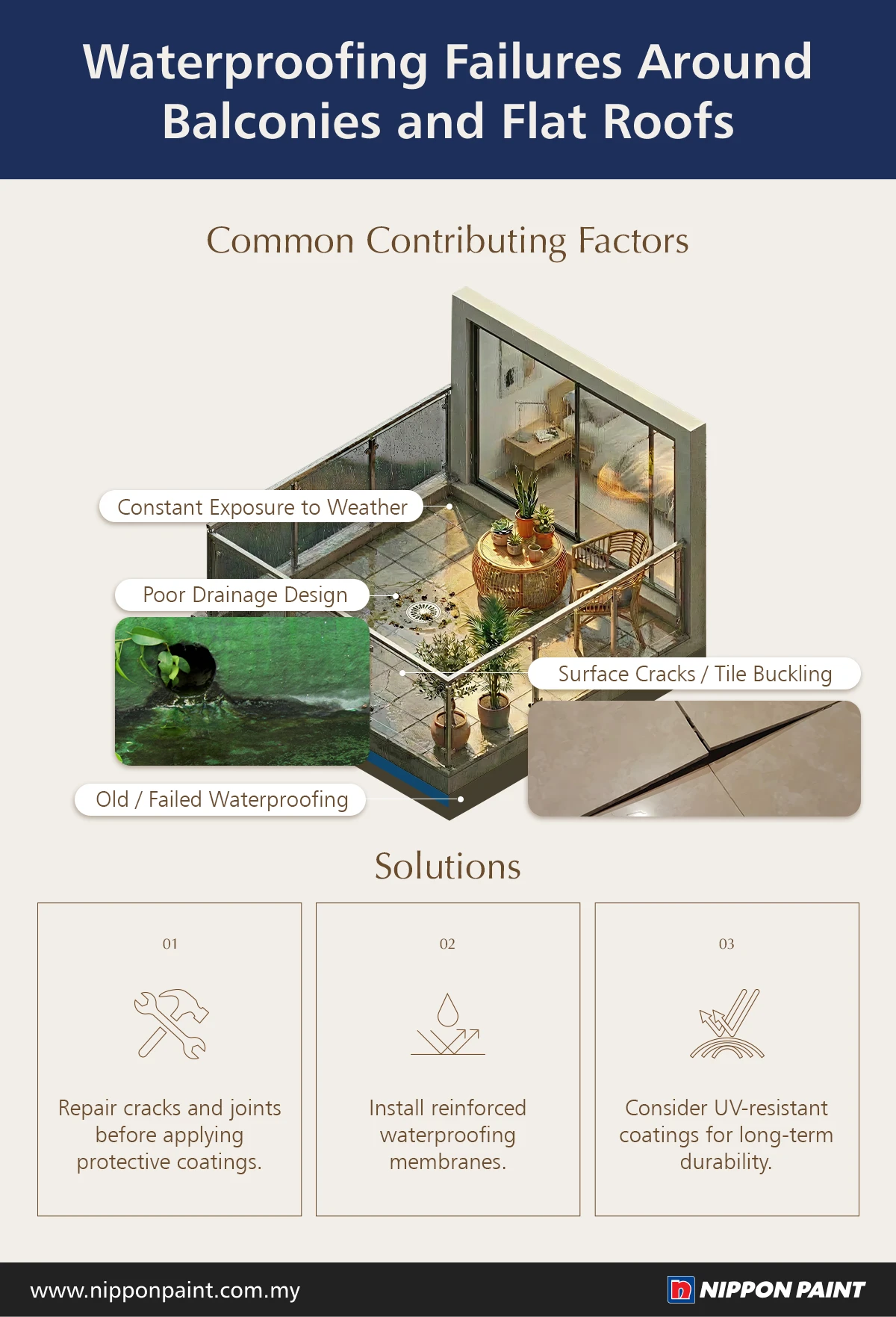
Balconies and terraces are constantly exposed to outdoor weather conditions such as rain, sunlight, and temperature changes. Over time, these environmental factors can weaken surface finishes and waterproofing layers.
Common Contributing Factors :
Constant exposure to weather : Rain and ultraviolet (UV) exposure can gradually deteriorate protective coatings on balcony surfaces.
Surface cracks and tile buckling : Small cracks or movement in tiles can create pathways that allow water to seep into the structure below.
Poor drainage design : If the balcony surface does not allow water to drain properly, rainwater may accumulate and increase the risk of leakage.
Old or failed waterproofing system from previous renovation : Waterproofing systems installed during past renovations may have deteriorated over time, been compromised by improper installation, or simply reached the end of their effective service life.
Practical solutions:
Repair cracks and joints before applying protective coatings.
Install reinforced membranes beneath surface finishes for added protection.
Consider UV-resistant coatings for long-term durability.
For guidance on balcony and flat roof waterproofing strategies, explore more on Nippon Paint Bare-to-Finish Solution for Balcony and Flat Roof here.
Why Proper Waterproofing System Matters
Proper waterproofing plays an important role in maintaining the durability and performance of buildings. When applied correctly, it helps prevent water intrusion that can lead to structural damage and costly repairs.
A well-protected home starts from the ground up. Proper waterproofing shields your roofs, walls, foundations, and wet areas from moisture, helping your home stay strong and beautiful for years. With Nippon Paint’s Bare-to-Finish Solution, every layer of your home is carefully protected; from surface preparation to the final coat, so you can create your most beautiful home.
FAQ
1. Why is water leaking through my bathroom floor even though the tiles look fine?
Tiles themselves are not fully waterproof. Water can seep through grout lines and small gaps over time. Without a proper waterproof membrane beneath the tiles, moisture may gradually penetrate the floor slab.
Improper floor slope or poorly sealed plumbing joints may also allow water to accumulate and seep into surrounding areas. Proper waterproofing beneath tiles and adequate drainage design help prevent these issues.
2. Can repainting a wall solve waterproofing problems?
Repainting alone may not solve waterproofing issues if the underlying cause has not been addressed. Standard decorative paints mainly improve appearance and may not provide sufficient protection against moisture penetration.
If cracks, poor surface preparation, or drainage issues exist, these should first be repaired before applying specialised waterproofing coatings.
3. Can waterproofing coatings be applied over existing tiles or surfaces?
In some cases, waterproofing coatings can be applied over existing surfaces, but the condition of the substrate plays an important role.
The surface must be clean, stable, and free from loose materials to ensure proper adhesion. In situations where tiles are damaged or moisture has already penetrated beneath them, more extensive repair work may be required before applying new waterproofing layers.
4. I recently repaired wall cracks, but they appeared again after some time. Why does this happen?
Cracks may reappear if the wall continues to experience structural movement or temperature-related expansion and contraction. If the repair material is too rigid, it may not accommodate these movements.
Using flexible repair materials and protective coatings designed to bridge minor cracks can help improve long-term performance.
5. I notice mould starting to appear on my wall. Could this be related to waterproofing?
Mould growth on walls can sometimes indicate excess moisture within the surface. When water penetrates through cracks, porous coatings, or poorly sealed joints, the wall may remain damp for long periods, creating conditions where mould can develop.
Inspecting the exterior wall surface and addressing possible moisture entry points can help prevent the problem from worsening.